
My Work
Learn more about my work below!
Select Publications
For full list see my google scholar page.
1. Hayden, M.T., Rossi, M.W., Dee, L.E., Kovach, K., Amaral, C.H., Nesslage, J., Slimp, M., Meyer, R.S., & Stavros, E.N. (2026). Scale dependence in remotely sensed biodiversity: Leveraging continental-scale imaging spectroscopy from the National Ecological Observatory Network. Remote Sensing in Ecology & Conservation. article link
2. Hayden, M.T., Van Cleemput, E., Suding, K., Lezberg, A., Anacker, B., & Dee, L. (2024). High resolution spectral data predicts taxonomic diversity in low diversity grasslands. Ecological Solutions and Evidence. article link
3. Ramachandran, A., Dee, L., Hayden, M.T., & Suding, K. (2024). Leveraging plant functional traits in the design of nature-based solutions: a research agenda. Journal of Ecology. article link
4. Lopresti, A., Hayden, M.T., Poulter, B., & Dee, L. (2024). Remote Sensing Applications for Analyzing Prescribed Fire: A Global Synthesis. International Journal of Wildland Fire. article link
5. Miller, S.J., Dee, L.E., Hayden, M.T., Jarrett, U., Carrico, A.R., Brauman, K.A., & Aceves-Bueno, E. (2024). Telecoupled systems are rewired by risks. Nature Sustainability. article link
6. Van Kleunen, L., Peterson, K., Hayden, M.T., Keyes, A., Li, H., & Dee, L. (2023). A predictive framework for species introductions under uncertainty and multiple management objectives. Ecology Letters. article link
7. Hayden, M.T., Holmes, K.D., and L. M. A. Hernández (2021). Multigenerational consequences of aphid size on offspring phenotype and reproduction. Entomologia Experimentalis et Applicata. 169: 947–958. article link
Impacts of Invasive Species to Biodiversity & Ecosystem Functioning
One of my ongoing postdoc projects (funded by the NASA Biodiversity Survey of the Cape - BioSCape) investigates the complex interactions between invasion, biodiversity, and ecosystem function in the Cape of South Africa. I combine remote sensing with statistical approaches for causal inference to both map critical ecological variables and evaluate the relationships among them. By focusing on how invasion directly and indirectly affects ecosystem functioning—such as water use—I aim to fill critical gaps in our understanding of how invasion operates on a landscape scale. This research maps invasive trees at a high spatial resolution and evaluates both the impacts of invasion direclty and indirectly (via changes in functional form and biodiversity) on water use, providing insights that are essential for more informed management of invasive species in the region.
Role of Biodiversity in Ecosystem Stability
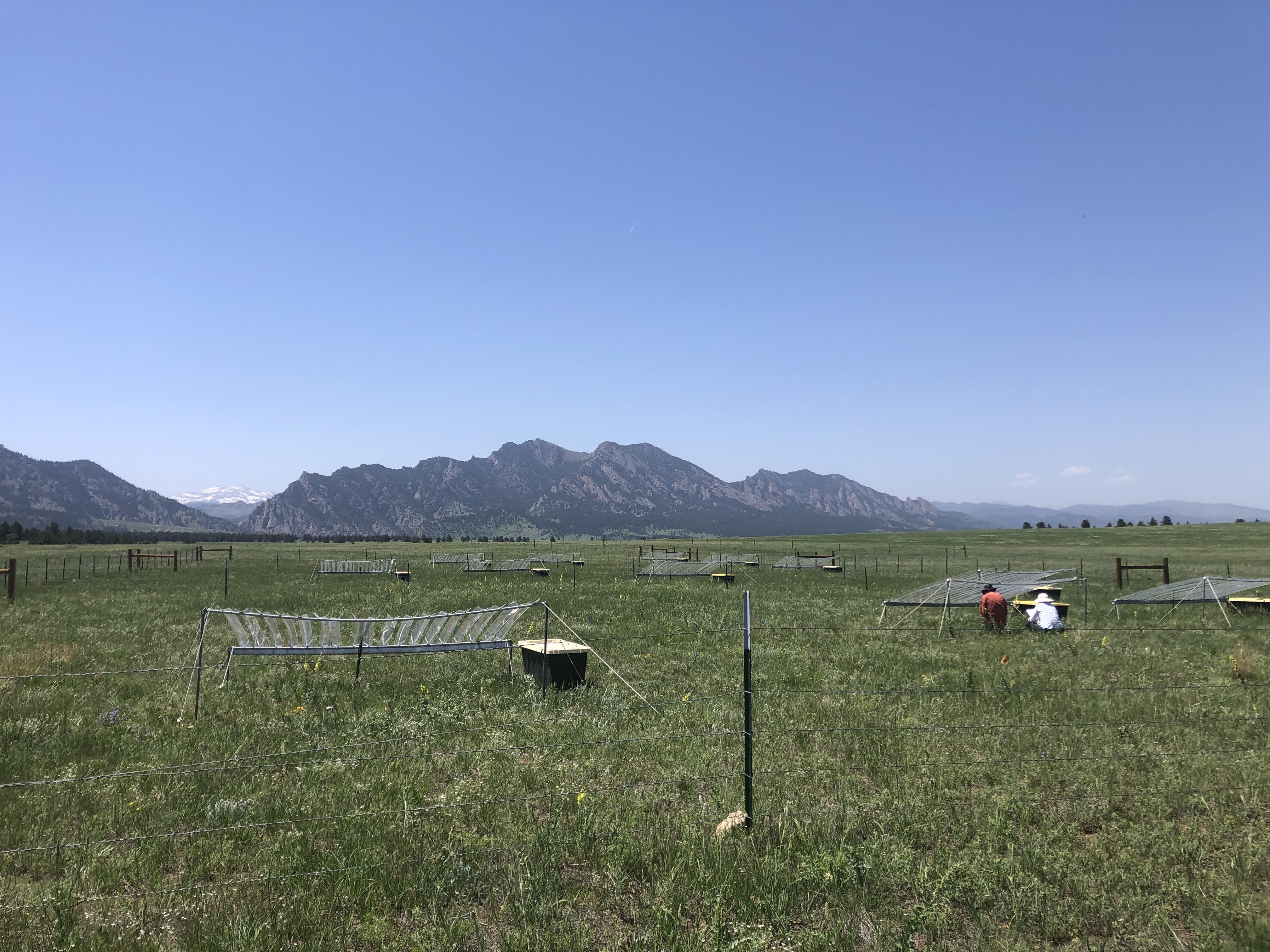
Another ongoing PhD project investigates the role of biodiversity in stabilizing function under climate change. This work is the result of my ongoing involvement with the International Drought Experiment and associated working group, as well as collaborations as part of the Response Diversity Network.
I use data from across >70 experimental sites where rainfall has been manipulated for multiple years to explore the role of diversity for stability in biomass production. I test a novel approach for capturing how the diversity of species’ responses - or response diversity (See Ross et al. 2023) - as an indicator of stability.
Exploring the Future of Remote Sensing for Biodiversity Monitoring
Throughout my dissertation work, I explore the potential for remote sensing to advance and inform ecological inquiries into biodiversity and its role in ecosystems. A few examples of this ongoing work include:
- I evaluate uses of spectral diversity in natural, highly diverse grassland ecosystems in High resolution spectral data predicts taxonomic diversity in low diversity grasslands. DOI.
- I explore the scale dependence of spectral diversity across diverse systems in Scale dependence in remotely sensed biodiversity: Leveraging continental-scale imaging spectroscopy from the National Ecological Observatory Network DOI.